Agroforestry in Coffee Farming: Choice or Necessity?
In a previous article, we talked about how the concept of agroforestry is an ancestral practice (link). In this article, I want to discuss the decision to practice agroforestry in modern times and share what I experienced here.
First of all, "agroforestry" is a blanket term used to describe how local farmers manage their crops. It is often used interchangeably with forest gardening, silvopasture, regenerative agriculture, permaculture, or shade-grown farming. They all refer to the core concept of treating the farm as an ecosystem so nutrients circulate in a balanced way to minimize environmental impact. The farmers in La Convención don't follow just one specific approach: some follow their ancestors' wisdom to make peace with Mother Earth, while others simply lack the resources to invest in an industrialized farming system. Agroforestry might be a choice, or simply a sign of poverty.
Unlike in neighboring coffee powerhouses like Brazil or Colombia, where coffee farms usually operate on a large scale, the farms in La Convención are typically tiny and hidden on cloud forest slopes. You won’t see coffee trees arranged in neat rows or a huge wet mill sitting next to the field.
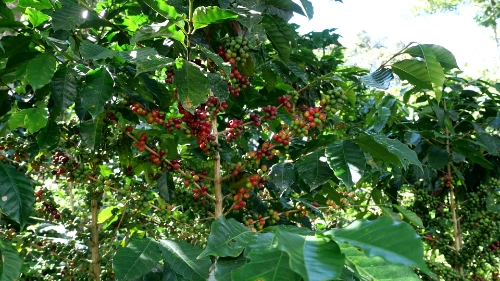
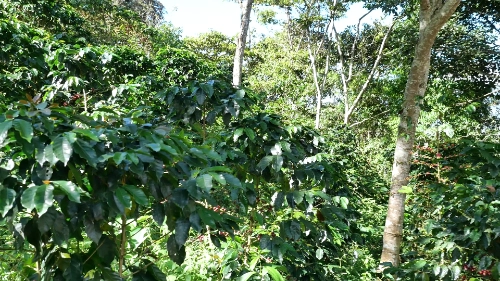
The Multi-Layer Forest Garden: Economic & Ecological Resilience
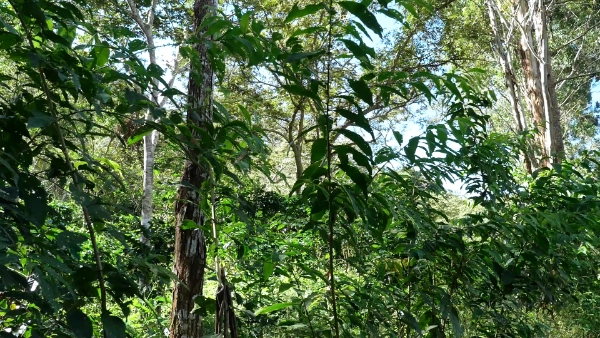
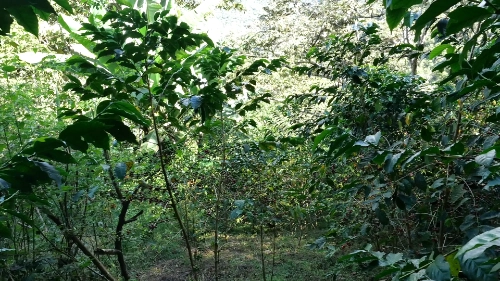
This is the norm for most coffee farms in La Convención, where coffee trees are part of a broader forest garden. Farmers usually include other cash crops, such as native cacao, bananas, plantains, citrus (oranges, lemons, and 10 other types), passion fruit, avocados, eucalyptus, turmeric, tubers, and various other plants. All these crops provide extra income for the family.
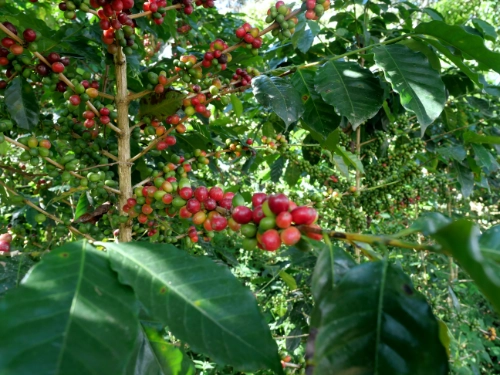
Back when most farmers worked with commercial coffee, they suffered from C-price fluctuation, sometimes the price was so low that they couldn’t make a profit to support their families. Because it was very hard to survive on coffee alone, more and more different crops were introduced to their farms. Ancestral wisdom kicks in when they plant these new crops: removing trees to make space is not the first option; instead, they consider the overall space and nearby plants. The result is what we see in the images above: a chaotic lush green.
Recently, with the growing focus on sustainability, many farms around the world are shifting toward the practices La Convención has been implementing for generations. Local farmers here have so much experience to share with the world about practicing agroforestry.